How Does Lipo Bliss Work? Eight Botanicals, Each With a Job
LipoBliss works as a once-daily liquid that puts eight named botanicals into one 1 mL dose. Here is what each one is on the chart for, in plain words.
Quick answer
LipoBliss works as a once-daily liquid that puts eight named botanicals into one 1 mL dose. The chart gives each a job: apple cider vinegar and banaba leaf for appetite, berberine HCl, cinnamon bark and banaba leaf for blood sugar already in a normal range, green tea and ginger for a small thermogenic lift, and Korean ginseng for everyday energy. It is a dietary supplement to use with diet and activity, so judge it over weeks, not days.
- Dose: 1 mL, about two droppers, once a day. One 30 mL bottle lasts 30 days.
- Roles: appetite, blood sugar theme, thermogenic pair, energy.
- Limits: no trial on the finished drops, and per-serving amounts are not published.
LipoBliss, also written Lipo Bliss, is a liquid dietary supplement taken as drops. It is sold in a 1 fl oz (30 mL) amber dropper bottle, and one serving is 1 mL, which is about two full droppers. Most people who search “how does LipoBliss work” want a plain answer without a sales pitch. This guide goes through the chart one botanical at a time, says what each one is there to do, and shows where the honest limits are.
What LipoBliss is made to do
The brand describes LipoBliss as support for appetite, calmer cravings, steady energy, everyday metabolism and blood sugar that is already in a normal range. It is not a weight-loss drug and it is not a shortcut. The idea is simple: eight plant ingredients are placed in one daily dose, and each has a different job. Together they are meant to make a sensible routine of meals and movement a little easier to keep.
The chart names green tea, apple cider vinegar, berberine HCl, banaba leaf, cinnamon bark, ginger root, Korean ginseng and resveratrol. The sales page also lists chromium picolinate at 7 mcg. The chart does not publish per-serving amounts for the botanicals, so this page prints no milligram figures. We would rather say that clearly than invent a number.
The appetite side: apple cider vinegar and banaba leaf
Apple cider vinegar and banaba leaf are the two appetite-side inclusions. Acetic acid is the active part of vinegar. Small trials link vinegar with slower stomach emptying and a flatter rise in blood sugar after a meal. A flatter rise often means a more even afternoon, and that is the route by which vinegar is thought to ease hunger. It is a nudge, not a switch.
Banaba leaf comes from Lagerstroemia speciosa and is the source of corosolic acid. It is included for carbohydrate and glucose support. The human evidence is a handful of small studies, so we read it as a supporting player rather than the star. We cover the vinegar line in more depth in our apple cider vinegar in LipoBliss guide.
The blood sugar theme: berberine HCl, cinnamon bark and banaba
Berberine HCl, cinnamon bark and banaba leaf all sit on the blood sugar theme. This is the part of the blend with the most published human research behind it. Berberine is the most studied compound on the chart, with reviews that look at blood sugar and lipid markers. Cinnamon bark has been studied for a modest effect on fasting blood sugar, with mixed results and small effect sizes.
Why does this matter for weight management? Many people find that cravings and energy dips follow big swings in blood sugar. Ingredients that smooth the curve may make a meal feel more complete. We say “may” on purpose. The research is on the single botanicals, not on the finished LipoBliss drops. Our berberine vs cinnamon guide compares the two in detail.
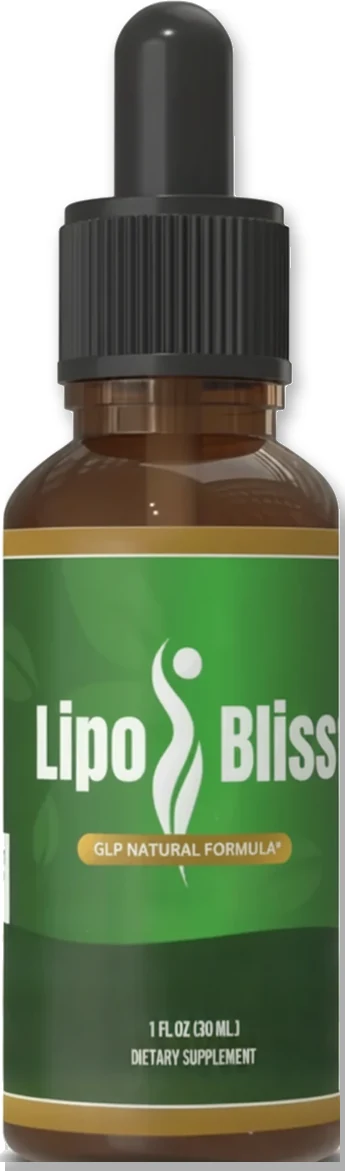
See the bottle and the packs
Check the 2, 3 and 6-bottle kits and the 60-day guarantee on the official website.
Order LipoBlissThe thermogenic pair: green tea and ginger
Green tea and ginger root are the thermogenic pair. Green tea catechins, EGCG above all, are associated in trials with a small rise in energy expenditure and fat oxidation. The word to keep in mind is small. The effect is real and much smaller than any advert suggests. Green tea also brings a little natural caffeine, so people who are sensitive to caffeine may prefer to begin with a half serving.
Ginger is described on the chart as a natural thermogenic. It has a long culinary record and a smaller research record for thermic effect and digestive comfort. It is a sensible fit in a liquid taken before a meal. Read our guide to green tea extract and EGCG for the background on the catechins.
Energy and metabolic support: Korean ginseng and resveratrol
Korean ginseng, Panax ginseng, is the adaptogen of the formula. It is carried for energy and everyday tiredness, not because it burns fat. Direct human evidence for weight change is thin, and we say so. Its role is to help the routine feel easy enough to keep.
Resveratrol is a polyphenol included for metabolic support. Many of the striking findings come from cell and animal work, and human results are more mixed. That gap matters here more than anywhere else on the chart, so we see resveratrol as a minor line, not a headline one.
How the daily routine makes the formula work
A formula only works if it is taken the same way each day. The label says to take 1 mL once a day, in the morning or just before your largest meal. Appetite and blood sugar are the levers here, so tying the dose to a meal you never skip makes sense. Many people start with a half serving, about one dropper, for the first two or three days to see how berberine and green tea sit with them, then move to the full 1 mL.
One 30 mL bottle gives thirty 1 mL servings, so a bottle lasts 30 days. The maker suggests 90 to 180 days of steady use to judge it. That is why the 3 and 6-bottle kits exist. Our guide to taking LipoBliss drops covers measuring the dose and building the habit, and how long supplements take to work gives a realistic timeline.
What LipoBliss does not do
Honest limits matter, so here they are. LipoBliss has had no clinical trial of its own. The research cited on this site is about the single botanicals. The label phrase “GLP natural formula” is marketing language, and LipoBliss is not a GLP-1 medicine. We explain the difference in LipoBliss vs GLP-1 drugs.
Berberine, cinnamon, ginseng and green tea extract have documented interactions with medicines for blood sugar, blood pressure and thyroid, so ask your doctor first if you take any of these. LipoBliss is not for anyone under 18, or during pregnancy or nursing. Results vary, and a supplement works best next to balanced meals and activity. If you want the full chart, see the LipoBliss ingredients guide or the ingredient section on the home page.
Related reading
Frequently asked questions
How does LipoBliss work?
LipoBliss is a once-daily liquid with eight named botanicals. Apple cider vinegar and banaba leaf are on the appetite side, berberine HCl, cinnamon bark and banaba leaf sit on the blood sugar theme, green tea and ginger are the thermogenic pair, and Korean ginseng is carried for daily energy.
Does LipoBliss work like a GLP-1 medicine?
No. The phrase GLP natural formula on the label is marketing language, not a regulated category. LipoBliss is a dietary supplement made of eight botanicals, and it is not a GLP-1 medicine.
How long does LipoBliss take to work?
Expect weeks, not days. The maker suggests 90 to 180 days of daily use for a fair trial, taken as 1 mL once a day alongside balanced meals and regular activity.
What are the eight botanicals in LipoBliss?
The chart lists eight botanicals: green tea, apple cider vinegar, berberine HCl, banaba leaf, cinnamon bark, ginger root, Korean ginseng and resveratrol.
References
Try LipoBliss with the 60-day guarantee
Buy on the official website so the guarantee applies. From $49 a bottle on the 6-bottle kit.
Order LipoBliss