L-Carnitine and Fat Metabolism: What the L-Carnitine Weight Loss Research Shows
L-carnitine has a real, well-mapped job in how your body turns fat into fuel — and a marketing story that runs several sizes too big. Here is the biochemistry, the trial evidence, the forms that matter, and the point where the honest read runs out.
Does L-carnitine help you lose weight?
L-carnitine transports fatty acids into the mitochondria, where they are burned for energy, so it is genuinely essential to fat metabolism — but supplementing it produces only small, slow weight changes in human trials, mostly in older or carnitine-low people. Treat it as supportive, not a stand-alone fat burner.
- Its core job is shuttling long-chain fatty acids across the mitochondrial membrane so they can be oxidised for fuel.
- Human weight-loss data are limited and modest — roughly one to two kilograms at most, over months, and usually alongside diet and exercise.
- It is commonly paired with green tea and garcinia because those ingredients act on different steps of the same pathway.
Search the ingredient list of almost any fat-loss formula and you will find L-carnitine near the top. It is one of the most-Googled supplement ingredients in the whole category, and the L-carnitine weight loss claims attached to it run from cautious to frankly absurd. The honest version sits in between: L-carnitine has a genuine, well-understood role in fat metabolism, and a human weight-loss record that is real but small. This piece separates the biochemistry — which is solid — from the marketing, which usually is not, so you can judge what a dose can and cannot do.
What L-carnitine actually does in the cell
Fat is stored as long-chain fatty acids, and those molecules cannot simply drift into the part of the cell that burns them. The mitochondrion — the cell’s furnace — is wrapped in a double membrane that long-chain fatty acids cannot cross unaided. That is the problem L-carnitine solves. It binds a fatty acid on the outside, ferries it across the inner membrane through a relay of enzymes known as the carnitine shuttle (carnitine palmitoyltransferase I and II, with a translocase in between), releases it inside, and returns to collect the next one. Without that shuttle, the fuel is stranded outside the furnace.
This is why the phrase “L-carnitine transports fat for energy” is accurate rather than hype. It genuinely is the transporter. The leap that marketing makes — and that the evidence does not support — is assuming that more transporter automatically means more fat burned. A furnace does not burn hotter because you widen the door; it burns hotter because there is demand for heat. In the body, that demand is set by exercise, by a calorie deficit and by hormones, not by how much L-carnitine is standing at the membrane. Supplying extra transporter only helps if transport was the bottleneck, and in most healthy people it is not.
Your body also makes its own L-carnitine, synthesising it from the amino acids lysine and methionine, and you absorb more of it from red meat and dairy. Between endogenous production and a normal omnivorous diet, most people carry adequate stores. That single fact reframes the whole conversation: a supplement helps most where a shortfall exists, and true shortfalls are concentrated in specific groups rather than the general population.
The L-carnitine weight loss evidence, read honestly
Here is where careful reading matters. Pooled analyses of randomised, placebo-controlled trials have repeatedly found that L-carnitine supplementation produces a small average reduction in body weight — on the order of one to two kilograms — over programmes lasting weeks to months. That is a real, replicated result, and it is also an unexciting one. The confidence intervals are wide, the individual trials are heterogeneous, and a meaningful share of them found nothing measurable at all.
Two patterns run through the data. First, the clearest effects tend to appear in older adults, in people who were low in carnitine to start with, and in populations with a metabolic reason to be depleted, rather than in young, healthy, well-fed gym-goers. Second, the trials that reported anything almost always paired the supplement with diet, exercise or both — which is exactly what the mechanism predicts, since transport only matters when there is a demand for fat as fuel. When a nutrient looks essential on paper and moves the scale only slightly in practice, the usual explanation is the correct one: correcting a shortfall restores normal function, it does not manufacture a surplus of it.
So, is L-carnitine effective for weight loss on its own? On this evidence, barely — and any label implying a dramatic, stand-alone effect is describing a mechanism, not a measured outcome. That distinction is the single most useful thing to carry out of this article.
Correcting a deficiency makes a system work properly. It does not make it work better than properly. Almost every disappointing supplement result in the literature is a version of that sentence.
Comparing metabolic support formulas?
LipoBliss is a once-daily liquid built on berberine, cinnamon bark, green tea catechins and Panax ginseng. See the current label and where to buy weight loss support from the official store.
Check AvailabilityWhy L-carnitine is paired with green tea and garcinia
Almost nobody sells L-carnitine as a solo product in the weight-loss aisle, and the reason is structural rather than cynical. Fat loss is a chain of steps — releasing fatty acids from storage, transporting them, oxidising them, and spending the resulting energy — and a single ingredient tends to touch only one link. Formulators respond by stacking ingredients that address different links, which is why L-carnitine so often shares a label with green tea and garcinia.
The logic is easy to state. Green tea catechins, particularly EGCG, together with the caffeine that comes with them, are associated in trials with a small rise in energy expenditure and in fat oxidation — effectively nudging the demand side of the equation. L-carnitine sits on the transport side, making sure liberated fatty acids can reach the furnace. Garcinia cambogia, via hydroxycitric acid, is proposed to influence fat storage and appetite, though its human evidence is the weakest of the three. Whether the combination adds up to more than the sum of its modest parts is not well established, but the design rationale is coherent: cover several stages instead of betting everything on one. We cover the demand side in detail in our read on green tea extract, EGCG and fat metabolism, and the storage-and-appetite claims in our review of garcinia cambogia and the HCA weight-loss evidence.
The practical caution is that a coherent rationale is not the same as a proven combination effect. Very few finished products in this space have ever been tested as finished products, so the honest position on any multi-ingredient blend is that the individual ingredients each have their own evidence file, and the stack itself is a reasonable bet rather than a demonstrated one.
Three myths worth retiring
Myth one: L-carnitine burns fat by itself. It does not. It is the delivery van, not the fire. Give a sedentary person extra vans and nothing happens if there are no deliveries to make. This is the most common misreading of the mechanism, and it is why supplement-only trials in people who are not exercising tend to be so underwhelming.
Myth two: more is always better. Above a certain intake, the fraction of an oral L-carnitine dose that is actually absorbed falls sharply — the transport systems in the gut become saturated, and much of the excess is simply excreted or metabolised by gut bacteria. Doubling the dose does not double the delivered amount, and megadoses mostly produce a more expensive urine stream and, in some people, a fishy body odour from bacterial breakdown products.
Myth three: everyone is deficient. Genuine L-carnitine deficiency is real but relatively narrow — it shows up in certain genetic disorders, in people on dialysis, sometimes in strict long-term vegetarians and vegans whose intake from food is low, and in some older adults. A healthy adult eating meat and dairy is very unlikely to be short, which is precisely why the supplement moves the needle so little in that group. Nobody selling you a capsule can honestly diagnose a deficiency from a glance at your gym routine.
Where L-carnitine looks more useful: exercise and energy
If the weight-loss headline is modest, there is a quieter story that holds up better. Several trials suggest L-carnitine may support exercise recovery — reduced markers of muscle damage and soreness after training, and in some studies a modest effect on perceived exertion and recovery between sessions. The proposed mechanisms include improved blood flow, a reduction in exercise-induced oxidative stress, and support for the mitochondrial energy production that hard training depends on.
This matters for anyone thinking about body composition rather than just scale weight. Better recovery can mean more consistent training, and consistent training is one of the few things that reliably changes how a body looks and performs over months. That is an indirect, unglamorous benefit, and it is worth stating in exactly those terms rather than inflating it. The energy angle is similar: because L-carnitine is woven into how cells generate ATP, some people report a subjective lift, though this is easy to confuse with the caffeine that usually shares the bottle. As with the weight data, the supportable claim is “may help”, not “will transform”.
The forms compared: what the label really means
“L-carnitine” on a label can mean several different compounds, and they are not interchangeable. The differences are mostly about where the molecule concentrates and how well it absorbs, not about a proven gap in fat-loss results.
| Form | What it is | Typical use | Evidence strength |
|---|---|---|---|
| L-carnitine L-tartrate (LCLT) | Carnitine bound to tartaric acid for faster absorption | Exercise recovery, sports formulas | Moderate for recovery markers; weak for fat loss |
| Acetyl-L-carnitine (ALCAR) | An acetylated form that crosses into the brain more readily | Marketed for focus, mood and cognition | Mixed; some cognitive-ageing data, weak for weight |
| Propionyl-L-carnitine (PLCAR) | Carnitine bound to a propionyl group | Circulation and vascular research | Niche; studied mainly outside weight loss |
| Plain L-carnitine | The base form, often as a liquid or powder | General repletion, budget products | Modest for repletion; the base of most trials |
Two label habits are worth watching. The first is dose: most human trials that reported anything used roughly one to three grams of L-carnitine per day, so a blend that hides a few hundred milligrams inside a proprietary matrix is unlikely to be doing what the front of the box implies. The second is absorption context: oral L-carnitine is absorbed better when insulin is elevated, which is one reason it is sometimes taken with a carbohydrate-containing meal. None of these details rescue a fundamentally modest ingredient, but they do separate a serious formula from a decorative one when you are checking a weight loss support product against what it actually delivers.
How L-carnitine fits inside a botanical formula like LipoBliss
It helps to be clear about what different ingredients are for. L-carnitine is a transport and repletion play — useful mainly where stores are low or where hard training raises demand. A botanical metabolic formula is a different bet: you are paying for plant compounds with their own pharmacological activity, and the questions that matter are dose, quality and interaction rather than deficiency. The two are not in competition; they simply address different links in the chain.
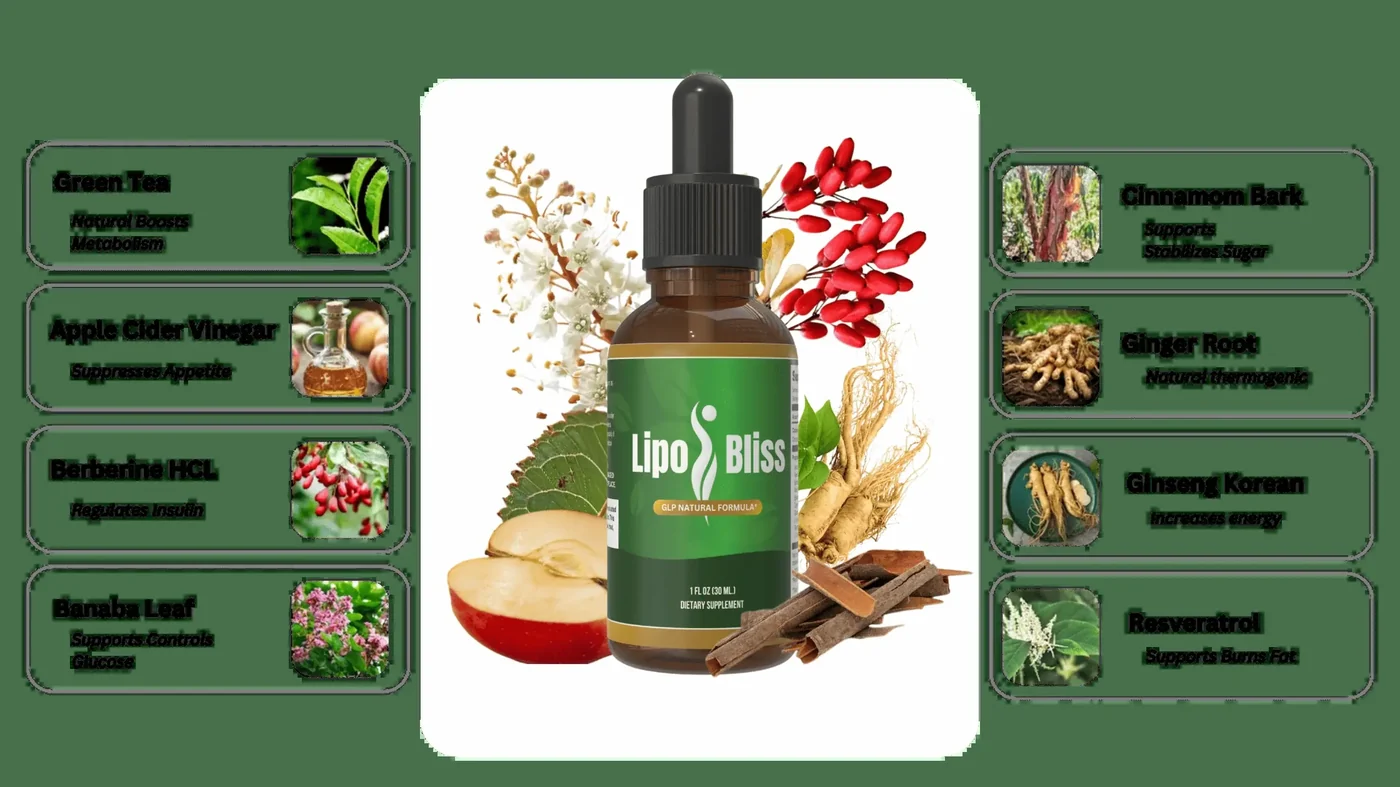
That botanical category is where LipoBliss sits — a once-daily liquid built around berberine, cinnamon bark, green tea catechins and Panax ginseng rather than around amino acids. If you already take L-carnitine for training reasons, there is no obvious conflict, though anyone on glucose-lowering medication should raise the whole stack with a prescriber, since several of these ingredients can nudge glucose in the same direction. For the mineral side of the same honest conversation, our read on magnesium and metabolic health covers a nutrient with a comparable profile: real mechanism, common shortfall, modest and slow effects. The overall verdict on L-carnitine is the same one that keeps recurring across this whole category. The biochemistry is genuine, the deficiency is real in specific groups, and the supplement earns a supporting role — but not the front-of-box promises, and not a place as anyone’s only strategy.
Related reading
- Green tea extract, EGCG and fat metabolism: what the evidence supports
- Garcinia cambogia and HCA: reading the weight-loss evidence
- The LipoBliss ingredients list: what is actually inside the bottle
- Magnesium and metabolic health: what the trials support
Frequently asked questions
Does L-carnitine burn fat?
Not directly. L-carnitine is the transporter that carries long-chain fatty acids into the mitochondria, where they are actually oxidised for energy. Supplying more of the transporter does not force more fat to be burned unless there is a demand for that fuel, which is why L-carnitine tends to matter most alongside exercise and a calorie deficit rather than on its own.
How does L-carnitine work in the body?
L-carnitine binds long-chain fatty acids and shuttles them across the inner mitochondrial membrane through the carnitine shuttle, a set of enzymes that hand the fat over to be broken down for ATP. Your body makes L-carnitine from the amino acids lysine and methionine and also absorbs it from red meat and dairy, so most healthy people are not deficient.
Is L-carnitine effective for weight loss on its own?
The human evidence is limited and modest. Pooled analyses of randomised trials report a small average reduction in body weight, on the order of one to two kilograms over several months, and the clearest effects appear in older adults and people who were low in carnitine to begin with. It is best viewed as a supporting ingredient, not a stand-alone fat burner.
Why is L-carnitine combined with green tea?
Because the two act on different steps of fat metabolism. Green tea catechins and caffeine are associated with a small increase in energy expenditure and fat oxidation, while L-carnitine handles the transport of fatty acids into the mitochondria. Pairing them, often with garcinia, is a formulation logic aimed at covering several stages of the pathway rather than relying on one ingredient.
References
- NIH Office of Dietary Supplements — Carnitine Fact Sheet for Health Professionals
- PubMed — Meta-analyses of L-carnitine supplementation and body weight
- Mayo Clinic — L-carnitine: uses, dosing and safety
- Harvard T.H. Chan School of Public Health — The Nutrition Source
- NIH National Center for Complementary and Integrative Health — Dietary and Herbal Supplements
See the full LipoBliss ingredient breakdown
Every botanical on the label, the dose caveats we could not verify, the current sale terms and the 60-day guarantee.
Visit the Official Store