Reading the LipoBliss Label: Proprietary Blend, One Disclosed Amount, and a Documented Ingredient-List Conflict
Most supplement reviews summarize a label. This one reads it literally — every ingredient named, the one amount actually printed, and a genuine conflict between two parts of LipoBliss's own sales page that we are not going to paper over by guessing which side is correct.
Quick answer
LipoBliss discloses a 200 mg “Proprietary Herbal Blend,” names nine ingredients inside it, and prints exactly one individual amount — chromium picolinate at 7 mcg. The sales page also claims “21 Botanicals, Aminos & Nutrients” without identifying most of them, and its own ingredient infographic lists a different set of eight ingredients than its own text does. Both things are true at once, on the same page. This article documents that plainly rather than resolving it by assumption.
- Nine ingredients named in the sales-page text; only one has a printed amount.
- “21 Botanicals, Aminos & Nutrients” is claimed; roughly half that many are ever identified.
- The product's own infographic and its own text list disagree on three ingredients — an unresolved conflict, not a typo we are choosing to fix for them.
A supplement label is supposed to answer two questions: what is in the product, and how much of it. LipoBliss's sales page answers the first question mostly, and the second question almost not at all — and when we checked whether the page was even internally consistent about the first question, it wasn't. Here is the full accounting, without smoothing over the parts that don't line up.
What the sales page states, transcribed in full
LipoBliss is sold as “GLP Natural Formula” liquid drops, in a 1 FL OZ (30 mL) dropper bottle labeled as a dietary supplement. Printed directions call for 1 mL (about two droppers) once daily, taken in the morning or before the day's largest meal, with the page stating “30-Day Supply Per Bottle.” None of that is in dispute; it is the same across the sales page and consistent with a 30 mL bottle used at 1 mL per day.
The formula section is where the page starts making claims it does not fully back up. The hero copy states “200mg Proprietary Herbal Blend” of “21 Botanicals, Aminos & Nutrients” and, separately, “7mcg Chromium Picolinate – 20% DV.” Under a section titled “Inside Every Dropper,” the page names nine ingredients, in this order, each labeled only with its blend category (root, seed, leaf, fruit, amino acid) and no individual weight:
| # | Ingredient (sales-page text) | Category label | Amount |
|---|---|---|---|
| 1 | Maca Root Extract | Proprietary Blend — Root | Not printed |
| 2 | African Mango Seed Extract | Proprietary Blend — Seed | Not printed |
| 3 | Green Tea Leaf Extract | Proprietary Blend — Leaf | Not printed |
| 4 | Coleus Forskohlii Root Extract | Proprietary Blend — Root | Not printed |
| 5 | Gymnema Sylvestre Leaf Extract | Proprietary Blend — Leaf | Not printed |
| 6 | Cayenne Pepper Fruit Extract | Proprietary Blend — Fruit | Not printed |
| 7 | Chromium | Chromium Picolinate | 7 mcg (20% DV) |
| 8 | L-Carnitine HCl | Proprietary Blend — Amino Acid | Not printed |
| 9 | Grapefruit Seed Extract | Proprietary Blend — Seed | Not printed |
Chromium's entry is the only line in that entire table with a number attached, and it is a genuinely tiny one — 7 micrograms is roughly 1/28,500th of the 200 mg blend total by weight, so its presence tells you almost nothing about how the rest of the blend is apportioned. Elsewhere in the page's prose, a paragraph about “metabolism-supporting aminos” mentions L-Tyrosine by name, but L-Tyrosine does not appear in the nine-item list above and gets no amount either. Counting generously, that puts the total number of identified substances at ten. The page's own claim is 21.
The conflict: the infographic doesn't match the text
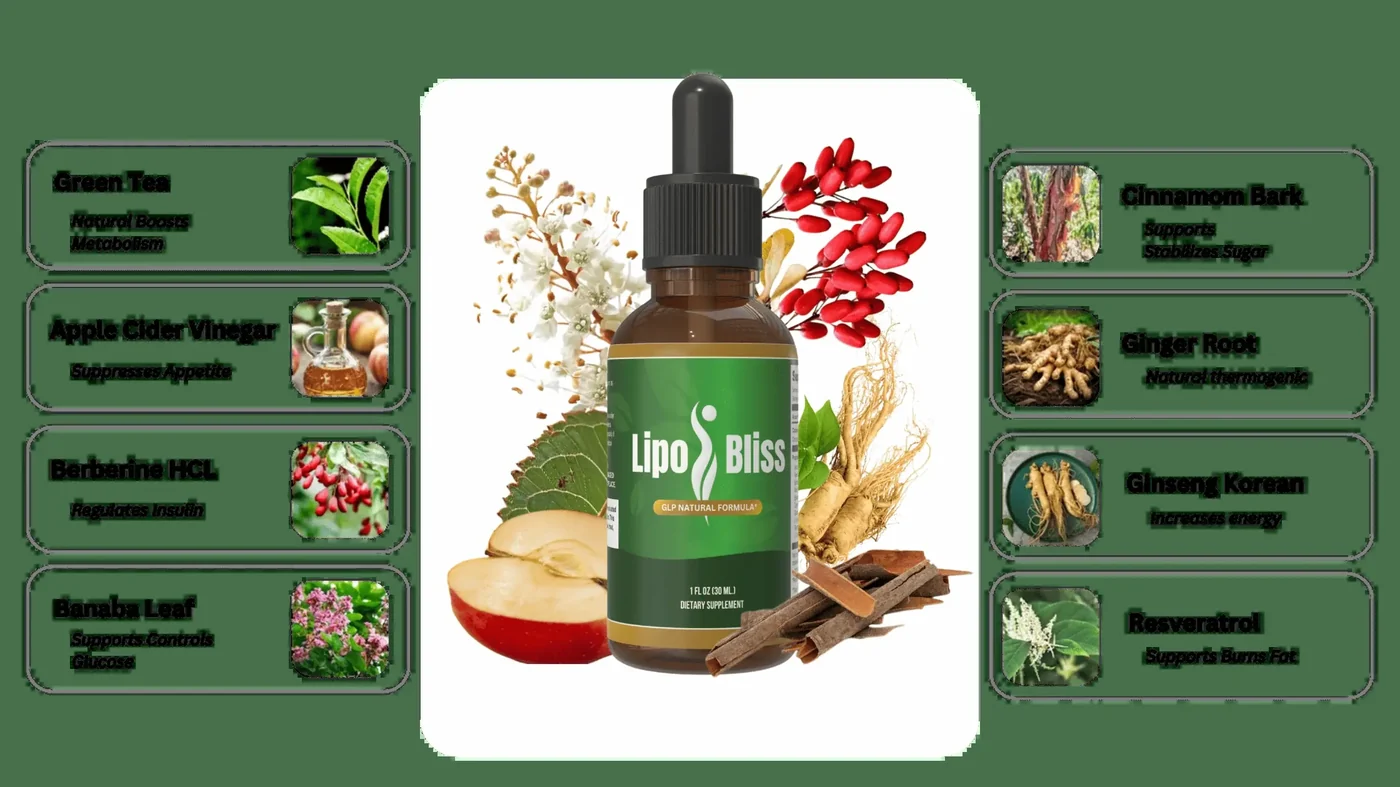
This is the part of the label review that took the most care, because it is easy to state carelessly and we don't want to do that. The sales page includes a separate ingredient graphic — an illustrated panel distinct from the text section above — that lists eight numbered items. Transcribed in the order shown: Maca Root Extract, African Mango Seed Extract, Grape Seed Extract, Guarana Seed Extract, Green Tea Leaf Extract, Gymnema Sylvestre Leaf Extract, Coleus Forskohlii Root Extract, Cayenne Pepper Fruit Extract.
Compare that against the nine-item text list above. Five ingredients appear in both places: Maca Root Extract, African Mango Seed Extract, Green Tea Leaf Extract, Gymnema Sylvestre Leaf Extract, Coleus Forskohlii Root Extract, and Cayenne Pepper Fruit Extract (six, not five — we double-checked). But the infographic includes Grape Seed Extract and Guarana Seed Extract, neither of which appears anywhere in the text-based ingredient section. And the text-based section includes Grapefruit Seed Extract, L-Carnitine HCl and Chromium, none of which appear on the infographic at all.
Grape Seed Extract and Grapefruit Seed Extract are two different plant materials with different constituents (proanthocyanidins versus a different extract profile); this is not a rounding of the same ingredient's name. Guarana is a caffeine-containing seed not mentioned anywhere else on the page, including in any stated caffeine content. Whether this is a production error — an old infographic left over from a prior formulation, a template reused across sister products, a text update that didn't get mirrored to the image, or something else — we cannot determine from outside the company, and no combination of the sales page's own content resolves which version is the accurate one.
Read the current label yourself
Formulas and sales pages can change. See the current LipoBliss listing, ingredient section and pricing at the official store before you decide.
Order LipoBlissWhat we are not doing here is picking a side. We are not telling you the infographic is outdated and the text is correct, or the reverse. Independent, freely-verifiable evidence to settle it — specifically, a printed Supplement Facts panel image, which is the document that would resolve this — does not appear anywhere on the sales page, on the product's official-looking domains (which redirect to a landing page whose content we could not read), or on any third-party source we were able to review. Some third-party review pages list yet a third ingredient set entirely, including Garcinia Cambogia and a capsule format rather than drops, which contradicts the bottle photography on the sales page itself; we treat those third-party pages as unreliable promotional content rather than a tiebreaker, and we are not using them as a source of truth here.
Why a documented conflict matters more than a missing number
A missing individual amount inside a proprietary blend is common in this product category and, while it limits what a buyer can verify, it is not by itself evidence of anything wrong — plenty of legitimately formulated supplements use blends. A conflict between two parts of the same official sales page is a different kind of issue. It means that even reading the seller's own materials carefully does not reliably tell you what is in the bottle, because the seller's own materials do not agree with each other.
This has a very specific, practical consequence: if you have an allergy, a sensitivity, or a medication interaction concern tied to one of the disputed ingredients — grapefruit (which is well known to interact with a range of medications via the liver's CYP3A4 enzyme pathway) versus grape seed extract, or caffeine content that guarana would add but the text list does not mention at all — you cannot resolve that concern from the sales page alone. You would need to contact the seller directly and ask which ingredient list reflects the current formula, and get that answer in writing before relying on it, particularly for the grapefruit question given how many common medications carry grapefruit interaction warnings.
The absence of a milligram figure is a transparency gap. Two different ingredient lists on the same product page is a factual gap. This article treats them as two separate, both-real problems, rather than folding the second into the first.
What a fully transparent label would look like, for comparison
It's useful to see the standard LipoBliss's label falls short of, stated plainly rather than as an accusation. A fully transparent botanical-blend label would: (1) print an individual milligram amount for every ingredient rather than a blend total, or at minimum for the ingredients most relevant to dosing comparisons and interaction screening; (2) state a forskolin, catechin, or other active-compound standardization percentage for extracts where one is meaningful; (3) list every ingredient it claims to contain, rather than naming under half of a stated total; (4) keep marketing graphics and text-based ingredient sections in sync, updated together whenever either changes; and (5) make a printed Supplement Facts panel image easy to find, not absent from the sales page and the linked informational pages alike. LipoBliss's label, as we found it on 2026-09-26, meets none of these five points fully. That's a specific, checkable assessment, not a general dismissal of the product.
None of this means LipoBliss's ingredients are absent or fake — the botanicals named are real, commonly used substances with their own research bases, several of which we cover in depth elsewhere, including what the Coleus forskohlii trials actually dosed and who should check with a doctor before taking the chromium picolinate in this formula. It means the amount of each ingredient, and in three cases even the ingredient's identity, is something the label does not let an outside reader confirm.
How to read a proprietary-blend label like this one, generally
A few habits apply beyond this one product. First, always check whether the blend total is stated per serving or per container; LipoBliss does not clarify this for its 200 mg figure. Second, note the ingredient order — U.S. labeling convention requires proprietary blend components to be listed in descending order by weight, so position at least tells you relative ranking even without absolute numbers; Coleus forskohlii's position fourth of nine, for example, tells you it isn't the single largest component, without telling you how large it actually is. Third, cross-check every image on a sales page against the text, not just the text alone — as this review found, marketing graphics are not guaranteed to be kept current. Fourth, look specifically for a printed Supplement Facts panel image, which is the actual FDA-format nutrition-label document, separate from marketing copy; its absence here is itself informative.
Frequently asked questions
What exactly does the LipoBliss label disclose?
A 200 mg “Proprietary Herbal Blend” total, nine named ingredients inside it (Maca Root Extract, African Mango Seed Extract, Green Tea Leaf Extract, Coleus Forskohlii Root Extract, Gymnema Sylvestre Leaf Extract, Cayenne Pepper Fruit Extract, Chromium, L-Carnitine HCl, Grapefruit Seed Extract), and exactly one individual amount: chromium picolinate at 7 mcg (20% DV). L-Tyrosine is mentioned once in prose but not in the ingredient list or given an amount.
Why does the sales page claim 21 ingredients but only name nine?
The sales page's hero copy describes the blend as “21 Botanicals, Aminos & Nutrients,” but the ingredient section of the same page names only nine of them (ten if L-Tyrosine, mentioned once in prose, is counted). The identity of the remaining roughly eleven to twelve items is not stated anywhere on the page we reviewed.
Does LipoBliss's own infographic match its ingredient list?
No. The sales page's ingredient infographic image lists eight items that include Grape Seed Extract and Guarana Seed Extract, which do not appear in the page's text-based ingredient list. The text list instead includes Grapefruit Seed Extract, L-Carnitine HCl and Chromium, none of which appear on the infographic. This is a documented conflict between two parts of the same sales page, not a resolved discrepancy.
Is a proprietary blend illegal or unusual?
No. Proprietary blends are legal under U.S. dietary supplement labeling rules, provided the blend's total weight and the ingredients within it (in descending order by weight) are listed, which LipoBliss does. What the rules do not require is an individual milligram amount for each ingredient inside the blend, which is the gap this article is about.
References
See the current LipoBliss label and pricing
Check the current sales-page ingredient section and pricing yourself at the official store.
Order LipoBliss